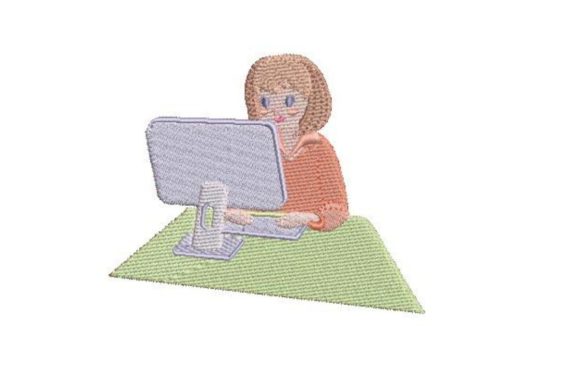
Review: Woman Typing on a Computer Design
As a designer who spends half my life digitizing and the other half stitching, I have learned that not every machine embroidery design looks as good on fabric as it does on a screen. When I first pulled up the Woman Typing on a Computer file, I was looking for more than just a cute graphic. I was evaluating its potential for real-world application in my craft business. This isn’t just about aesthetics; it is about how a design holds up under the needle, how it appeals to clients, and whether it adds genuine value to a finished product.
First Impressions and Visual Personality
The initial mood of this design is professional yet approachable. It captures a modern, relatable moment that resonates with anyone who spends their day behind a keyboard. For embroidery designers and Etsy sellers, this thematic relevance is gold. The layout feels balanced, avoiding the clutter that often plagues complex scenes. When I zoomed in to inspect the stitch paths, I noticed a thoughtful mix of techniques. The use of satin stitch for defining lines provides crisp edges, while fill stitches likely handle the broader areas of the computer screen and clothing.
This visual personality makes it versatile. It doesn’t scream "novelty item," which allows it to sit comfortably in a boutique setting. Whether you are creating custom apparel for a remote worker or a personalized gift for a colleague, the design maintains a level of sophistication. It feels current, which is crucial for small shop products that need to stay relevant throughout the year, not just during specific holidays.
Real-World Application: From Screen to Stitch
To truly test the viability of this embroidery project, I imagined it on several common substrates. My primary test case was a canvas tote bag. Tote bags are staples for craft fairs and online stores. The Woman Typing on a Computer motif fits perfectly here, appealing to students, freelancers, and office workers. On a sturdy cotton canvas, the design’s details should pop, provided the stabilizer is chosen correctly. A cut-away stabilizer would be my go-to choice to prevent puckering, ensuring the final product looks professional rather than homemade in the negative sense.
I also considered this design for sweatshirt embroidery. A left-chest placement on a heather grey crewneck could serve as subtle branding for a tech startup or a clever personal statement. However, this requires careful attention to stitch density. If the design is too dense, it can make the fabric stiff and uncomfortable against the skin. For baby embroidery, such as on a onesie for a "future coder" gift, the scale becomes critical. You must ensure the tiny details, like the fingers on the keyboard or the screen content, do not merge into a blob when stitched out at a smaller size.
Navigating Technical Challenges
While the concept is strong, practical execution requires vigilance. One area where I advise caution is with textured fabrics. If you are stitching this on a waffle-knit towel or a fuzzy fleece, the finer details of the woman’s face or the computer keys might get lost. In these cases, simplifying the thread colors or increasing the size slightly can help maintain clarity. Similarly, stretchy fabrics like jersey knits demand a high-quality stabilizer and possibly a topping to keep the stitches from sinking into the nap.
Dark fabric presents another challenge. If you are stitching this on a black hoodie, you need to ensure your thread colors have enough contrast. A dark blue thread on black fabric will vanish. I always recommend running a test stitch on scrap fabric first. This allows you to check thread color contrast and confirm that the hoop size you have selected accommodates the entire design without hitting the edges. For curved surfaces like caps, the design might need to be broken down or simplified, as complex horizontal layouts can distort on the front panel of a hat.
Commercial Value and Customer Appeal
For commercial embroidery and digital product sellers, the appeal of Woman Typing on a Computer lies in its niche specificity. It targets a massive demographic: the working class, the creative entrepreneur, and the student. This broad appeal increases buyer engagement. When customers see a design that reflects their daily life, they are more likely to purchase. It transforms a generic item into a personalized gift that feels thoughtful.
From a brand consistency standpoint, this design works well for businesses targeting professionals. It can be part of a larger collection of work-themed embroidery files. When used in printable mockups for your Etsy listings, ensure the lighting highlights the texture of the stitches. High-quality photos of the finished product build customer trust. Buyers want to see that the satin stitch is smooth and the fill stitch is even. A sloppy stitch-out can damage your reputation, so taking the time to perfect the tension and threading is non-negotiable.
Designer Notes for Best Results
Before you commit to a large production run or list this as a new design asset, consider these practical steps:
- Test on Scrap Fabric: Always stitch a sample on the same material you plan to use for the final product. This reveals issues with puckering or thread breaks.
- Check Stitch Density: Review the file settings. If the density is too high for lightweight fabric, consider using a water-soluble stabilizer on top to support the stitches.
- Verify Hoop Size: Confirm that your machine’s hoop can accommodate the design dimensions. Nothing is more frustrating than starting a stitch only to realize the design is too wide.
- Inspect Small Details: Zoom in on the digital file. Are there tiny running stitch elements that might break easily? If so, you may need to manually edit them or accept that they are delicate.
- License Confirmation: If you plan to sell finished items, double-check the license terms associated with the digital embroidery file. Some creators allow commercial use for physical goods but restrict the sale of the file itself.
Final Verdict
The Woman Typing on a Computer design is a solid addition to any designer’s library, particularly for those focusing on work-related or lifestyle themes. It bridges the gap between fun and professional, making it suitable for a wide range of applications from tote bag designs to corporate gifts. Its success, however, depends entirely on execution. By paying attention to fabric texture, stabilizer choice, and thread contrast, you can elevate this from a simple pattern to a high-value handmade product.
For the hobbyist, it offers a satisfying challenge with a rewarding result. For the small business owner, it represents a versatile asset that can drive sales year-round. Just remember that the beauty of embroidery lies in the details. Take the time to refine your process, and this design will become a reliable staple in your portfolio of finished products.